

Religion + Psychoanalysis
The relationship between psychoanalysis and religion has a fraught history. Freud was famously hostile to religion, positioning psychoanalysis as an alternative to its consolations. Ironically, his creation came to mirror and rival religion, or, in Ann Pellegrini's phrasing, carry a "queer structure of religious feeling."
Many of us come to psychoanalysis and quietly rediscover echoes of religious life both in our work with patients, and in the make-up of our communities and institutes. For analysts and patients alike, religion is often treated as the central "problem" or primary trauma of a treatment. Yet religion, even for former believers, shapes the texture of who we are still becoming. Gender, sexuality, and affective experience all bear the mark of past and present belief. How might we reckon these tensions?
This five-week course offers fresh ways to think about religious identity in the consulting room. We will place particular emphasis on countertransference, and our personal relationships with religion. To do that, we will reach alongside psychoanalysis into other bodies of theory and performance a visual art. The syllabus includes readings and ideas from Freud, Erich Fromm, José Esteban Muñoz, Ann Pellegrini, Jean Laplanche, and Michael Warner, alongside the work of artists Taylor Mac and Jesse Darling.
Readings provided by instructor, some supplemental films may involve small rental costs.
Class Type: Course
Location: Online via Zoom
Fees: (member $375/non-member $450) - 2 sliding scale slots available.
Max Capacity: 20
Learning Objectives:
- Identify and describe at least three ways religious history or religious structures (e.g., ritual, authority, confession, belief) can appear in clinical material, with an emphasis on countertransference, using concepts from the course readings.
- Compare Freud's critique of religion with at least one alternative framework from the syllabus (e.g., Pellegrini's "queer structure of religious feeling," Muñoz's work on disidentification), explaining in writing or discussion where the frameworks agree and diverge.
- Apply a concept from the readings or artworks to a clinical vignette, a personal reflection, or an institutional experience, and present the analysis in discussion.
References:
Danny Gellersen (2026) A Peculiar People - Mormonism, Drag Performance, and Erotic Non-Belonging at the Intersection of a Psychoanalyst’s Werk and Identity, Psychoanalytic Dialogues, 36:1, 75-91, DOI: 10.1080/10481885.2025.2605429
Orsi, R. A. (2004). Between heaven and earth: The religious worlds people make and the scholars who study them. Princeton University Press.
Pellegrini, A. (2017). Queer structures of religious feeling: What time is now? In K. L. Brintnall, A. J. Stein, & J. R. H. Engel (Eds.), Sexual disorientations: Queer temporalities, affects, theologies (pp. 240–257). Fordham University Press. https://ebookcentral.proquest.com/lib/nyulibrary-ebooks/detail.action?docID=5151544
Saketopoulou, A. (2023). Sexuality beyond consent: Risk, race, traumatophilia. NYU Press.
Cancellation Policy: If you need to cancel your purchase, please do so before March 26, 2027, by emailing admin@nwaps.org to request a refund minus a 30% cancellation fee. We are unable to process or offer any refund for cancellations made after March 26, 2027. Allow 2-4 weeks to process your refund request. Note that participation in the entire event is required to obtain CE credits.
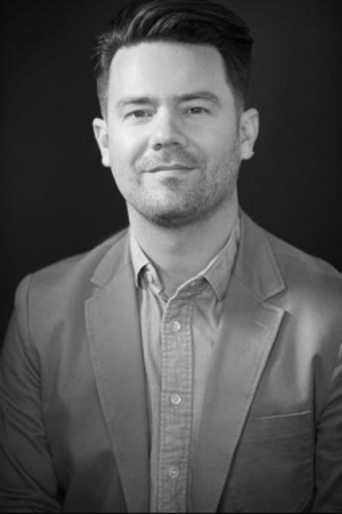 Speaker and Credentials: Danny Gellersen, LICSW
Speaker Bio: Danny Gellersen, LICSW, is a licensed clinical social worker and psychoanalyst in private practice in Seattle, Washington, and New York State. They are a graduate of the National Institute for the Psychotherapies National Training Program in New York City and reside full-time in Seattle, where they teach on the faculty of the Seattle Psychoanalytic Society and Institute and chair the Distinguished Speaker Series for the Northwest Alliance for Psychoanalytic Study. Their work and studies as an artist, writer, educator, and student of realist classical drawing, Mormonism, queer theory, and drag performance are deeply intertwined with their clinical work.


